

Central Serengeti - A Wildlife Photographers Guide
Updated: Jun 22
A Wildlife Photographer’s Guide to Central Serengeti
The Central Serengeti is one of Africa’s most iconic wildlife photography destinations. Defined by endless savannah, granite kopjes, and big skies, this vast landscape forms the heart of the Serengeti ecosystem. For photographers, the Central Serengeti offers space, scale, and freedom. It is a place where predators roam openly, light travels unobstructed across the plains, and compositions are shaped by simplicity and distance.
Unlike enclosed systems, the Central Serengeti rewards patience and fieldcraft. Wildlife encounters unfold across wide horizons, allowing photographers to work with clean backgrounds, layered scenes, and natural behaviour. Lions, leopards, cheetahs, elephants, and large herds of plains game are present year round, making this region one of the most consistent and rewarding areas for serious wildlife photography in Tanzania.
This photographic guide helps travellers understand how to approach the Central Serengeti from both a creative and technical perspective. Central Serengeti – A wildlife photographer’s guide covers natural history, photographic subjects, equipment, challenges, lighting, and the rhythm of a day on safari. For those planning a photographic safari in Tanzania, the Central Serengeti represents the foundation of the Serengeti experience, offering both creative freedom and exceptional wildlife encounters.
Central Serengeti Natural History
The Central Serengeti forms the core of the greater Serengeti ecosystem, a vast wilderness shaped by volcanic soils, seasonal rainfall, and one of the largest animal migrations on Earth. This region sits between the southern short grass plains and the western and northern corridors, making it a year round stronghold for wildlife.
The landscape is dominated by open grasslands interspersed with rocky granite outcrops known as kopjes. These ancient formations rise abruptly from the plains and provide shelter, shade, and elevated vantage points for predators. Lions use kopjes as resting sites, lookout posts, and denning areas, while leopards often claim them as core territory. For photographers, kopjes introduce strong visual anchors that break the horizon and add structure to otherwise minimal scenes.

Serengeti Rock Lion Pride - Untamed Photo Safaris 
Serengeti Rock Lion Pride - Untamed Photo Safaris
Seasonal rivers such as the Seronera create ribbons of life through the plains. These water sources support dense concentrations of wildlife, especially during the dry season, and are prime locations for predator activity. The surrounding riverine woodland introduces softer light, textured backgrounds, and opportunities for more intimate compositions compared to the open plains.
The Central Serengeti supports a full spectrum of plains game including wildebeest, zebra, gazelles, buffalo, and topi. These herbivores attract large numbers of predators, resulting in frequent interactions that unfold naturally across the open landscape. While the Great Migration passes through the region at certain times of year, resident wildlife ensures photographic opportunities remain strong in every season.
The defining characteristic of the Central Serengeti is scale. From lone cheetahs crossing open plains to lions framed against distant storm clouds, the region’s natural history allows photographers to place wildlife within a powerful sense of space. This balance between subject and environment is what makes the Central Serengeti so visually compelling.

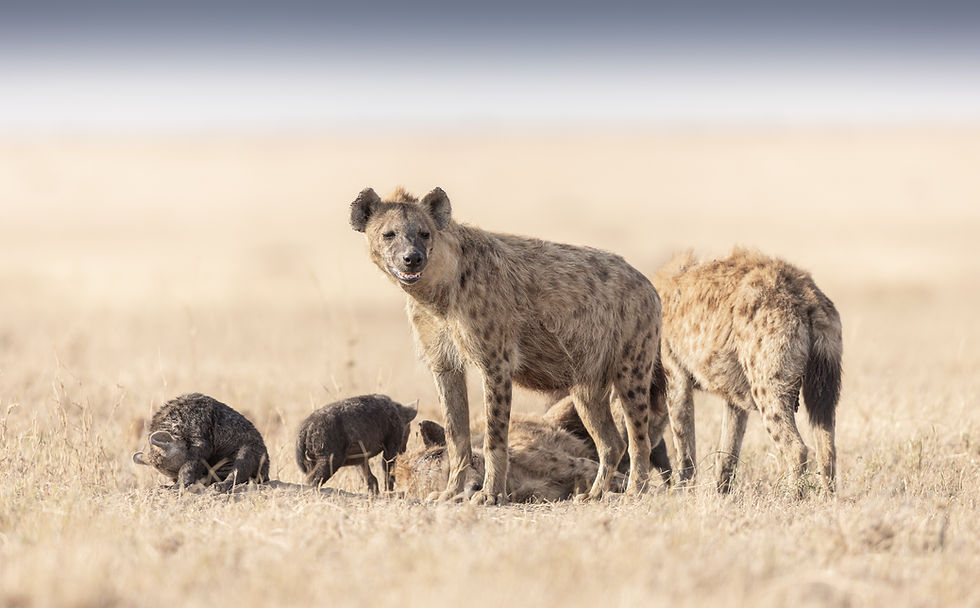
Spotted Hyena - Untamed Photo Safaris 
Gaping Hippo - Untamed Photo Safaris 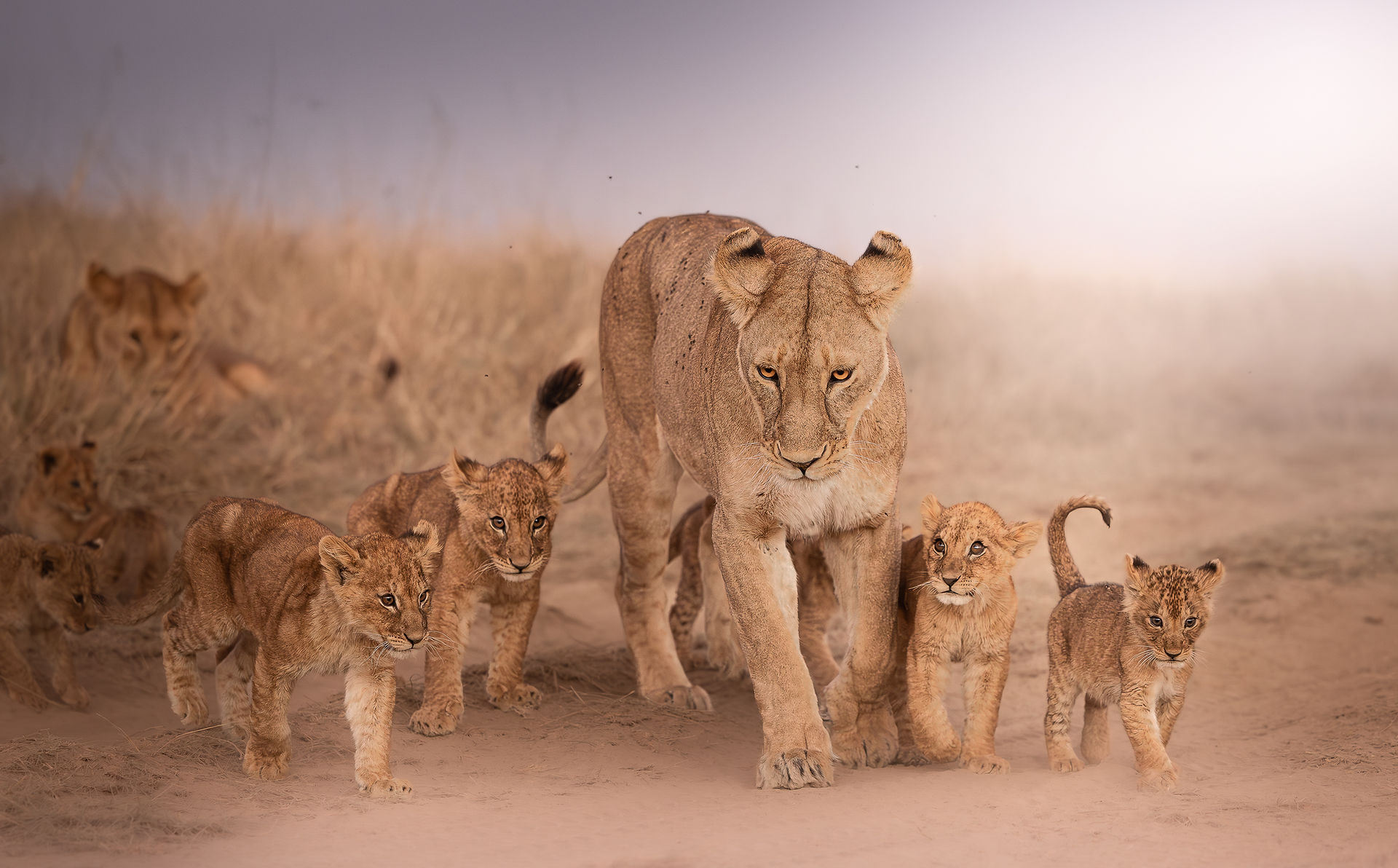
Lioness and Cubs - Untamed Photo Safaris
Getting to the Central Serengeti
The Central Serengeti is most commonly accessed via scheduled light aircraft flights from Arusha, Kilimanjaro, or other northern circuit destinations. Flights typically land at Seronera Airstrip, placing photographers directly within prime wildlife areas.
Overland access is possible when combining the Serengeti with Ngorongoro, though travel times are longer. Once inside the park, the Central Serengeti offers an extensive network of tracks that allow for flexible game drives throughout the day.
Accommodation ranges from permanent lodges to mobile and seasonal camps, many of which are positioned close to rivers and kopjes. Staying within the Central Serengeti allows photographers to maximise early morning and late afternoon light, when wildlife activity and photographic conditions are at their best.
The Central Serengeti represents one of the most complete and functional predator–prey systems in Africa. Its open plains, minimal visual obstruction, and consistent wildlife density allow photographers to work methodically with behaviour, light, and composition. The landscape favours clean backgrounds, long sightlines, and controlled framing, making it particularly well suited to both behavioural and environmental wildlife photography.
Lions
The Central Serengeti supports a stable and well distributed lion population, with individuals frequently associated with kopjes, drainage lines, and open hunting plains. Lions are regularly encountered resting on elevated rock formations, moving through grasslands in early morning light, or engaging in social behaviour such as grooming, feeding, and territorial interactions. The lack of dense vegetation enables clear subject separation and consistent eye-level compositions, ideal for structured portraits and extended behavioural sequences.
Leopards
Leopards in the Central Serengeti are most often located along riverine corridors and kopje systems where cover and elevation provide hunting advantage. These environments create controlled light conditions, particularly in early morning and late afternoon, allowing for precise exposure and contrast management. Photographic opportunities commonly include leopards resting in trees, moving through grass with partial concealment, or emerging from cover in low directional light. Patience and anticipation are key to producing strong, uncluttered frames.
Cheetahs
Cheetahs are exceptionally well suited to the open plains of the Central Serengeti, where visibility allows photographers to observe scanning behaviour, stalks, and high-speed pursuits from a distance. The landscape enables clean tracking during movement and strong isolation when subjects are positioned against negative space. Cheetah photography in this region often benefits from wider compositions that emphasise scale, tension, and subject placement rather than tight framing alone.
Elephants
Elephants move predictably across the Central Serengeti, often utilising river systems and open plains. Their large size and slow movement lend themselves well to environmental compositions, particularly when paired with layered skies or storm light. Side lighting and backlighting are especially effective for highlighting texture, dust, and form, while wider focal lengths can be used to incorporate scale without losing subject dominance.
General Game
Plains game including wildebeest, zebra, gazelles, buffalo, giraffe, and topi form the foundation of the Central Serengeti ecosystem. Their constant movement across open terrain allows photographers to construct layered scenes, anticipate predator interactions, and capture dynamic compositions that reflect spatial relationships within the landscape. These species are also valuable compositional elements for scale, depth, and storytelling.
Birdlife
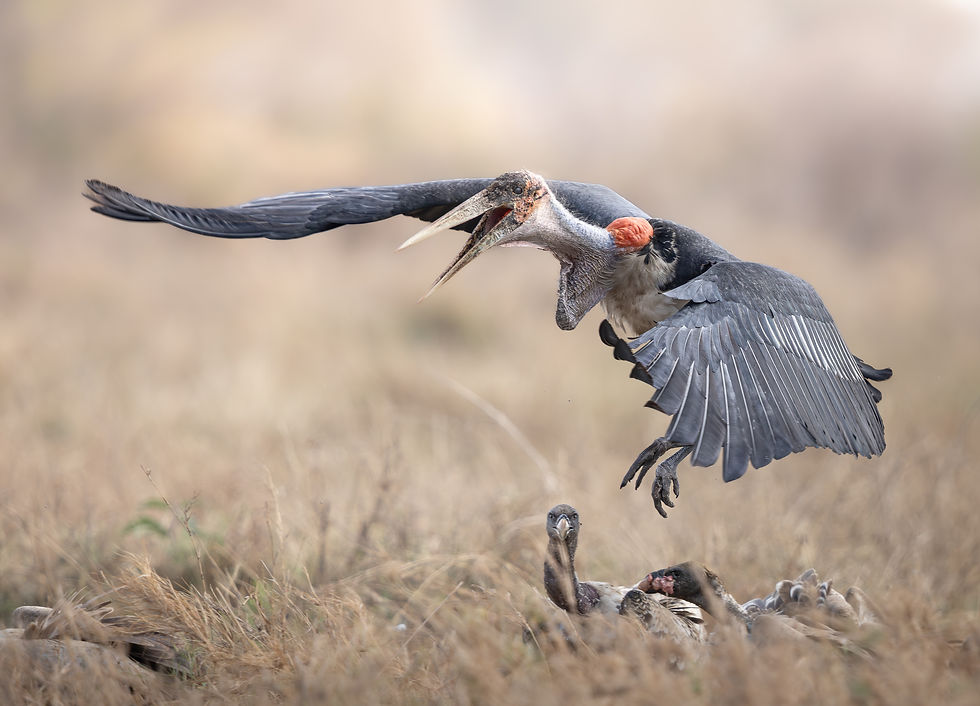
The Central Serengeti supports a strong raptor population, including martial eagles, secretary birds, bateleurs, and multiple vulture species. The open terrain and reliable thermals provide consistent opportunities for flight photography. Early morning and late afternoon offer the most controlled light for capturing wing detail, while perched raptors on termite mounds and trees allow for clean, well isolated portraits.

Serengeti Photographic Safaris - Untamed Photo Safaris 
Lion Pride - Untamed Photo Safaris 
Serengeti Photographic Safaris - Untamed Photo Safaris
Equipment to Bring
For a dedicated wildlife photography safari in the Central Serengeti, we recommend the following equipment. Please note that the following kit recommended by the Untamed team is not mandatory and is intended as a guideline rather than a requirement. When attending a photographic safari with Untamed Photo Safaris, you do not need to bring all of the items listed below.
Telephoto Lens (300mm to 600mm range)
Long lenses are essential in the Central Serengeti due to the vast scale of the landscape and extended viewing distances. Predators such as cheetahs, scanning lions, and leopards along river systems are often encountered at range, making focal length critical for subject isolation and behavioural detail. Zoom lenses such as a 100–400mm or 100–500mm provide flexibility as subjects move closer or change position, allowing photographers to adapt framing quickly without repositioning the vehicle. Prime lenses including 300mm, 400mm, 500mm, and 600mm offer superior sharpness, stronger background compression, and improved subject separation. In the Central Serengeti, primes are particularly effective during early morning and late afternoon light, when clean horizons and distant plains allow subjects to stand out clearly.
Mid-range Zoom (70–200mm or 70–300mm)
This focal range is one of the most versatile options in the Central Serengeti and frequently produces some of the strongest storytelling images. Lions resting on kopjes, elephants approaching river crossings, and layered plains game scenes often fall perfectly within this range. It allows photographers to maintain subject presence while retaining environmental context, which is essential in a landscape defined by scale and openness. Mid-range zooms also perform exceptionally well during behavioural sequences, where framing flexibility helps maintain composition as interactions unfold.
Wide Angle Lens (24–70mm or similar)
Wide angle lenses are invaluable for capturing the sense of space that defines the Central Serengeti. This focal range is ideal for environmental portraits, particularly when lone predators move across open plains or when dramatic weather systems build on the horizon. Wide angle lenses are also well suited to sunrise and sunset scenes, where light, shadow, and cloud structure become key compositional elements. Used carefully, they allow photographers to emphasise atmosphere and scale without overwhelming the subject.
Two Camera Bodies
Using two camera bodies allows photographers to switch instantly between focal lengths, which is essential in the Central Serengeti where behaviour can change rapidly. A predator moving from a distant scan to close interaction, or a sudden shift from wildlife action to environmental opportunity, often leaves no time for lens changes. Carrying two bodies also reduces sensor exposure in dusty conditions and ensures each camera can be optimised with different settings, such as one configured for fast action and the other for wider environmental frames.
Beanbag or Stabilisation
Most photography in the Central Serengeti is conducted from within the vehicle, making a beanbag the most practical stabilisation solution. A beanbag provides a stable shooting platform for long lenses, particularly when photographing from window frames or roof hatches. This stability is essential for maintaining sharpness during early morning light, storm conditions, or when tracking moving subjects across the plains. A secure support also allows photographers to hold composition more precisely during extended behavioural sequences.
Polariser (optional)
A polarising filter can be useful in the Central Serengeti, particularly during the green season or under storm light conditions. It helps reduce glare, deepen blue tones in the sky, and enhance cloud structure, adding definition to wide environmental scenes. A polariser can also improve colour saturation across grasslands and vegetation, though it should be used selectively as it reduces overall light transmission and may require exposure adjustments.

Tips for Overcoming Central Serengeti’s Photographic Challenges
Managing Distance
The scale of the Central Serengeti means wildlife is frequently encountered at long distances, particularly predators and scanning cheetahs on open plains. Success comes from using focal length, perspective, and positioning to control compression and subject separation rather than forcing tight framing.
How to overcome it:
Use longer focal lengths (400–600mm) to compress distance and simplify backgrounds, especially when subjects are aligned against sky or distant plains.
Avoid aggressive cropping. Instead, wait for subjects to move naturally into cleaner light, improved angles, or stronger background separation.
Adjust vehicle position to achieve eye-level shooting where possible, increasing subject presence and reducing the visual impact of distance.
Work with subject movement rather than against it, allowing behaviour to resolve the composition organically.
Recommended settings:
Aperture: f4 to f8 depending on subject distance
Shutter speed: 1/1250 or faster to maintain crispness
ISO: 400 to 800 depending on light
White balance: Cloudy or daylight
Exposure: Slight underexposure (minus 0.3) to hold highlight detail
Working with Harsh Light
Midday light in the Central Serengeti is often strong and contrast heavy due to the openness of the plains. Rather than avoiding these conditions, photographers can adapt by working intentionally with light direction and subject choice.
How to overcome it:
Prioritise behaviour and movement over traditional portraiture, where storytelling carries more weight than soft light.
Use side light to emphasise muscle definition, texture, and form, particularly on lions, cheetahs, and elephants.
Work with backlight to create rim light, dust highlights, and subject separation from bright backgrounds.
Relocate toward river systems, kopjes, or shallow drainage lines where reflected light and partial shade reduce contrast.
Expose for highlights to preserve detail in pale fur and grass, allowing shadows to deepen naturally for mood.
Recommended settings:
Aperture: f5.6 to f8 to maintain depth and control contrast
Shutter speed: 1/1600 or faster to freeze movement in strong light
ISO: 100 to 400 depending on brightness
White balance: Daylight
Exposure: Slight underexposure (minus 0.3 to minus 0.7) to protect highlights

Photographing Predators on the Plains
Predators in the Central Serengeti often remain stationary for extended periods, particularly during heat or between hunting cycles. Strong images are typically the result of anticipation, preparation, and compositional discipline rather than constant repositioning.
How to overcome it:
Watch body language closely, noting subtle changes such as ear orientation, head lifts, tail movement, or posture shifts that signal impending action.
Pre-compose frames using negative space to build tension and allow movement to complete the image naturally.
Maintain consistent framing, focus, and exposure during inactive periods so you are technically prepared for sudden behaviour.
Use controlled burst shooting during transitions such as standing, walking, or scanning rather than continuous firing.
Exercise patience. In open landscapes, restraint often leads to stronger, more intentional images.
Recommended settings:
Aperture: f4 to f7.1 depending on group size and depth required
Shutter speed: 1/1600 or faster to capture sudden movement
ISO: 200 to 640 depending on light conditions
White balance: Cloudy or daylight
Exposure: Neutral to slight underexposure (minus 0.3) to retain detail in fur and sky

Lighting in the Central Serengeti
Morning Light
Early mornings in the Central Serengeti are defined by clean, low-angle light moving uninterrupted across open plains. With minimal obstruction on the horizon, the first light creates long shadows, strong subject separation, and a sense of scale that works exceptionally well for predators on the move. Lions returning from hunts, cheetahs scanning from termite mounds, and solitary subjects crossing open ground all benefit from this directional light. The clarity of the air at sunrise allows for crisp detail and strong contrast without the harshness that develops later in the day.
Photographic tips:
Position yourself side-on to moving subjects to maximise shadow length and depth.
Use the open horizon to place subjects against negative space rather than busy backgrounds.
Allow animals to move into the light rather than repositioning constantly, preserving natural behaviour.
Recommended settings:
Aperture: f4 to f7.1 depending on subject distance
Shutter speed: 1/1250 to 1/2000 for moving predators
ISO: 200 to 640 depending on light level
Exposure compensation: Neutral to plus 0.3 to retain shadow detail
White balance: Daylight or cloudy for natural warmth

Overcast Light
Overcast conditions in the Central Serengeti create evenly diffused light across the plains, reducing contrast and allowing fine detail to be rendered cleanly. This light is ideal for portraits, social interactions, and extended behavioural sequences where consistent exposure is critical. Fur texture, eye detail, and tonal transitions remain controlled, making overcast conditions especially effective for lions resting on kopjes, cheetahs with cubs, and close-range general game.
Photographic tips:
Focus on behaviour and expression rather than dramatic lighting.
Work with mid-range focal lengths to balance subject isolation and environmental context.
Take advantage of the stable light to maintain consistent exposure across sequences.
Recommended settings:
Aperture: f4 to f7.1 for balanced depth of field
Shutter speed: 1/1250 or faster for subtle movement
ISO: 400 to 800 depending on cloud density
Exposure compensation: Neutral
White balance: Cloudy for warmth or auto for neutral tones

Golden Light
Late afternoon light in the Central Serengeti introduces warm tones, elongated shadows, and increased contrast as the sun drops toward the horizon. This light is particularly effective across open plains where rim lighting, dust, and atmospheric layers can be used creatively. Lions walking through tall grass, giraffes crossing ridgelines, and birds in flight photograph exceptionally well in this light, with edge highlights enhancing form and movement.
Photographic tips:
Shoot into the light to capture rim-lit fur, dust, and heat haze for added atmosphere.
Use side light to define muscle structure and shape, particularly on large mammals.
Expose carefully to protect highlights while allowing shadows to fall naturally.
Recommended settings:
Aperture: f2.8 to f5.6 for strong subject separation
Shutter speed: 1/1600 or faster for movement and flight
ISO: 100 to 400 depending on brightness
Exposure compensation: Minus 0.3 for backlit scenes, neutral for side light
White balance: Daylight or cloudy to enhance warm tones

Storm Light
Storm light in the Central Serengeti produces some of the most dramatic and cinematic conditions on the plains. Dark, textured clouds combined with breaks of directional light create high-contrast scenes that emphasise scale and mood. Elephants, giraffes, and solitary predators framed against approaching storms become powerful environmental subjects, with the landscape playing an equal role in the composition.
Photographic tips:
Position subjects against the darkest part of the sky to maximise separation.
Watch for shafts of light breaking through cloud layers to isolate animals on the plains.
Allow shadows to deepen for mood while protecting highlight detail in the sky.
Recommended settings:
Aperture: f4 to f8 depending on depth required
Shutter speed: 1/1600 or faster for moving subjects
ISO: 200 to 640 depending on light levels
Exposure compensation: Neutral to minus 0.3 to retain sky detail
White balance: Auto or daylight for natural tones

A Day on a Photo Safari in the Central Serengeti
A typical day with Untamed Photo Safaris begins before sunrise, with guests positioned deliberately in open plains or near established predator territories based on recent movement and behaviour. Morning sessions are guided with a clear photographic objective, focusing on directional light, subject movement, and behavioural moments rather than passive viewing. This is often when predators are most active, and our approach prioritises clean angles, controlled backgrounds, and eye-level shooting where possible.
As light strengthens, the pace slows and the focus shifts. Midday is used strategically for scouting, reviewing behaviour patterns, and repositioning toward areas that offer shade, texture, or reflective light such as river systems and kopjes. This period allows photographers to refine compositions, work on environmental frames, or take a break without feeling rushed, while our guides continue to read conditions for the afternoon session.
Afternoon drives resume as light softens and direction returns. Untamed Photo Safaris places strong emphasis on golden light, backlit scenes, silhouettes, and approaching weather systems, using vehicle positioning and timing to maximise photographic potential. As the sun drops toward the horizon, the plains take on warm tones and long shadows, offering final opportunities for cinematic environmental images before returning to camp.
Our Thoughts
If you have enjoyed reading the Central Serengeti – A Wildlife Photographer’s Guide, we hope it has shown that this region offers creative freedom unlike anywhere else in Africa. Its open landscapes, predator density, and dramatic light allow photographers to tell powerful visual stories rooted in scale and simplicity. The Central Serengeti is not about forced encounters, but about patience, anticipation, and letting nature shape the frame. Read all about what makes the Northern Serengeti a photographer’s paradise.
Subscribe to our YouTube Channel!
Join Us on Safari
Untamed Photo Safaris leads professional photographic journeys across Tanzania, including extended time in the Central Serengeti. With personalised guidance and a strong focus on ethical wildlife photography, our safaris are designed to help photographers refine their skills and create meaningful work in the field. If you would like to join us in Tanzania or learn more about our upcoming photographic safaris, we would be honoured to guide you through the heart of the Serengeti.
Written by Wildlife Photographer & photo host Jaren A. Fernley


