

Our Recent Private Kenya Photo Safaris - 2026
Our Recent Private Photo Safari - 2026
At Untamed Photo Safaris, every private Kenya photo safari is built around one principle: creating the best possible photographic opportunities for our guests. Rather than following a rigid schedule or rushing from sighting to sighting, our private safaris allow us to focus entirely on wildlife behaviour, lighting conditions and photographic positioning for guests.
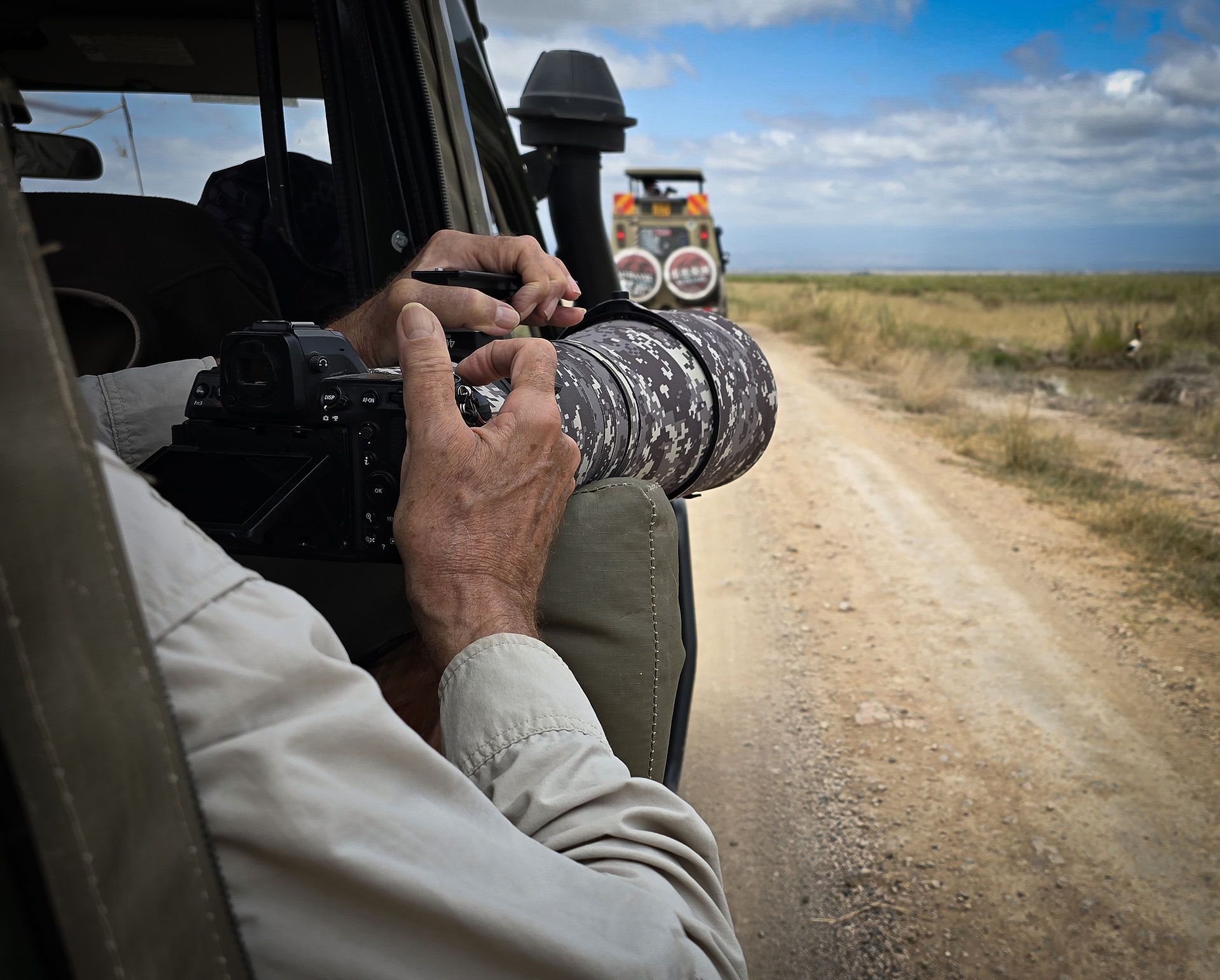
Recently, photo host Mark A. Fernley led a private wildlife photography safari through three of Kenya's most rewarding destinations for a single photographer: the Maasai Mara, Amboseli National Park and the Lumo Conservancy. Travelling in one of our specialised photographic vehicles configured exclusively for one - three photographers, the safari combined big cat encounters, elephant photography and an unforgettable experience from one of Kenya's finest photographic hides.

Private Safari Planes - Untamed Photo Safaris 
Private Photo Safaris - Untamed Photo Safaris 
Masai Mara Photographic Safaris
Big Cat Photography in the Masai Mara
The first stage of the safari took place in the Masai Mara, where the focus was placed firmly on predators. Staying at Mara Bush Camp, our objective was to photograph lions, leopards and, if luck was on our side, some of the Mara's more elusive feline residents.
One of the most productive sightings of the trip centred around a pride of lions feeding on a hippo carcass. For many safari-goers, simply finding lions on a kill would be enough. For wildlife photographers, however, finding the subject is often only the beginning. The real challenge lies in understanding behaviour and positioning correctly before the action unfolds.
Rather than joining the majority of vehicles gathered around the carcass, photo host Mark A. Fernley positioned the vehicle on the opposite side of the scene. The reasoning was simple. The light was falling in our favour and, more importantly, any scavengers attempting to steal meat from the carcass would likely trigger a reaction from the lions. The prediction proved correct.

Charging Male Lion - Mark A Fernley 
Hyena & Carcass - Mark A Fernley
As jackals repeatedly approached the kill, the lions launched several aggressive charges to defend their meal. Because of our positioning, those charges unfolded directly towards the vehicle. Using 400mm lenses wide open at f/2.8 and f/4, our guest was able to capture a series of dramatic images showing the lions running towards the camera from approximately thirty metres away.
Rather than spending a few minutes at the sighting and moving on, we remained with the pride for several hours, allowing us to observe the changing dynamics around the carcass and maximise every photographic opportunity as it developed.
A few days later, another predator encounter presented itself in the northern region of the Maasai Mara.
This time, a different pride of four lions had taken down a buffalo. As the lions rested after feeding, vultures began circling overhead before gradually dropping towards the carcass. Once again, positioning became critical. With beautiful golden evening light beginning to sweep across the plains, Mark and his driver positioned the vehicle to take advantage of a combination of side and front lighting. The result was exactly what we had hoped for. As the vultures pushed their luck and attempted to move closer to the carcass, the lions repeatedly charged from their resting positions.
The warm evening light illuminated the scene perfectly, creating a series of powerful action photographs that highlighted both the strength of the lions and the constant battle between predators and scavengers that plays out across the Maasai Mara.
A Memorable Encounter with a Serval
While the Mara is famous for its lions and leopards, one of the most rewarding sightings of the safari came in the form of a much smaller cat. Early one morning near the marsh area in the northern Maasai Mara, movement in the grass caught our attention.
A serval! Although servals are seen periodically within the reserve, obtaining strong photographs of them can be surprisingly difficult. Their relatively small size means that many images are taken from above, often losing the intimacy that makes wildlife photography so powerful.
As the cat moved through the grass in the soft blue light of early morning, photo host Mark A. Fernley positioned the vehicle with his driver, beside a small clearing. He predicted that the serval would naturally move through the opening, as this would provide an easier route through the grass. That decision made the photograph possible.

Serval Cat - Masai Mara - Mark A Fernley 
Private Masai Mara Photographic Safari - Untamed Photo Safaris 
Serval Cat photographed by our client Gert
With the vehicle correctly positioned, our guest was able to get low and shoot through the opening, creating a clean view of the serval rather than photographing through heavy grass. Using long telephoto lenses in the 400mm and 500mm range, the final images combined a low perspective with a beautifully natural frame.
For approximately ten minutes, the serval wandered through the area, occasionally pausing to play with its tail before continuing on its journey. At one point, the cat passed so close that it moved directly beneath the vehicle while we remained completely silent.
The resulting images captured not only the beauty of the serval, but also the atmosphere of the Mara at first light, with cool tones and soft grasses framing one of Africa's most elegant predators.
Patience Rewarded with a Leopard
The final major predator encounter came on the last day of our stay in the Masai Mara.
A young female leopard had been seen within the area and, rather than rushing between sightings, we committed our time to the encounter. Wildlife photography often rewards patience, and on this occasion patience proved invaluable. For approximately two hours we waited, watching and anticipating movement while carefully considering how the available light might shape the eventual photographs.
When the leopard finally appeared, the planning began to pay off. Using a Nikon Z 400mm f/2.8 TC VR S, our guest was able to capture beautiful portraits as the leopard emerged from the vegetation and began walking across the open plains. The soft evening light was now beginning to settle across the landscape, creating ideal photographic conditions. As the leopard moved gracefully through the grasslands, Mark repositioned the vehicle several times to take advantage of changing angles, backgrounds and the direction of the light, ensuring the strongest possible compositions.

Female Leopard, Masai Mara - Mark A Fernley 
Startled African leopard photographed in the tall grass of the Masai Mara by Mark A Fernley
As the afternoon progressed, the encounter continued to improve. The leopard eventually settled in an area of lush green grass where she remained for nearly ten minutes. During this time, our guest was able to create a variety of intimate portraits, capturing both the beauty and character of the young female. The contrast between the rich green vegetation, the warm tones of the leopard's coat and the soft golden light created some of the strongest images of the safari.
The encounter was far from over. As sunset approached, the leopard moved towards a nearby tree and paused at its base, providing another excellent photographic opportunity. We carefully worked the scene as the light softened further, producing a series of elegant images that showcased the cat within its environment. Shortly afterwards, she climbed into the tree itself, allowing us to photograph her both from below and later as she settled high among the branches. These final moments produced a wonderful variety of images, from classic leopard portraits to wider environmental compositions that captured the atmosphere of the Mara at the end of the day.
Leopard and Tree, Masai Mara - Untamed Photo Safaris Private Photographic Safaris - Untamed Photo Safaris Leopard in the Mist, Masai Mara - Untamed Photo Safaris
The encounter evolved naturally throughout the afternoon, allowing us to photograph the leopard in a remarkable range of situations as the golden light of the Masai Mara slowly faded towards sunset.
These moments are often what make private photographic safaris so rewarding. Without the pressure of other guests or fixed schedules, we were free to dedicate as much time as necessary to a single subject and allow the encounter to unfold naturally. The result was not simply a sighting, but a complete photographic experience that produced an exceptional collection of images and memories.

Black and White Leopard Photography - Masai Mara 
Leopard in the tree - Masai Mara
Photographing Elephants in Amboseli National Park
Leaving the predators of the Masai Mara behind, the focus of the safari shifted towards one of Africa’s most iconic photographic subjects: elephants.
Amboseli National Park is widely regarded as one of the finest locations in Africa for elephant photography. Its combination of large herds, open landscapes, seasonal marshes and the towering presence of Mount Kilimanjaro creates opportunities that are difficult to replicate anywhere else on the continent.
One of our primary objectives was to create images that combined elephants with the famous mountain backdrop. Patience once again played an important role. Rather than chasing wildlife, we spent time positioning ourselves where we believed the elephants would move naturally through the landscape. Eventually, that patience was rewarded. As the mountain cleared, elephants began to cross the open plains beneath Kilimanjaro, creating exactly the type of classic Amboseli image photographers travel across the world to capture.

Private Amboseli Photographic Safari - Untamed Photo Safaris 
Private Amboseli Photographic Safari - Untamed Photo Safaris
Another memorable session centred around a large herd moving towards the marshes. Based on years of experience in Amboseli, and by observing the movement of the herd throughout the morning, Mark anticipated that the elephants would eventually leave their current location and head towards fresh grazing near the swamps. Positioning ourselves ahead of time allowed our guest to photograph the herd as it approached. The result was a series of images showing elephants walking directly towards the camera, with the rich greens of the marshes providing a beautiful contrast to the grey skin of the animals.
Further opportunities followed within the swamps themselves, where elephants fed amongst the lush vegetation that makes Amboseli so unique. This created a completely different atmosphere from the dry plains often associated with elephant photography, adding colour, texture and a strong sense of place to the images.
One particularly enjoyable session took place amongst tall reeds, where a 70-200mm lens allowed us to create more intimate compositions. Rather than isolating the elephants completely, the wider focal length helped incorporate the surrounding habitat and emphasise the feeling of being immersed within the landscape alongside the herd.
From classic Kilimanjaro backdrops to quieter moments in the swamps, Amboseli provided a beautiful contrast to the Masai Mara and delivered a very different, but equally rewarding, photographic experience.

Amboseli Elephant Photography - Untamed Photo Safaris 
Amboseli Elephant Photography - Untamed Photo Safaris
Lions Bluff Hide and the Lumo Conservancy
The final destination of the safari was the Lumo Conservancy, an increasingly popular location for wildlife photographers seeking unique perspectives and intimate wildlife encounters.
Staying at Lions Bluff Lodge, one of our main photographic objectives was to spend time inside the Lions Bluff photographic hide. The hide offers the chance to photograph wildlife at eye level as animals come to drink, creating a very different style of image compared with traditional vehicle-based safari photography.
The wait was surprisingly short.
Approximately twenty minutes after entering the hide, a lioness appeared.
As she emerged and approached the water, excitement inside the hide quickly built. Eye-level encounters with large predators are always special, but they become even more memorable when the animal is completely relaxed and behaving naturally.
The lioness settled at the water and began drinking.
For the next thirty minutes, she remained in front of the hide, providing an extraordinary photographic opportunity. With no vehicles, no distractions and nothing separating photographer from subject except the carefully designed hide itself, the experience felt remarkably intimate.
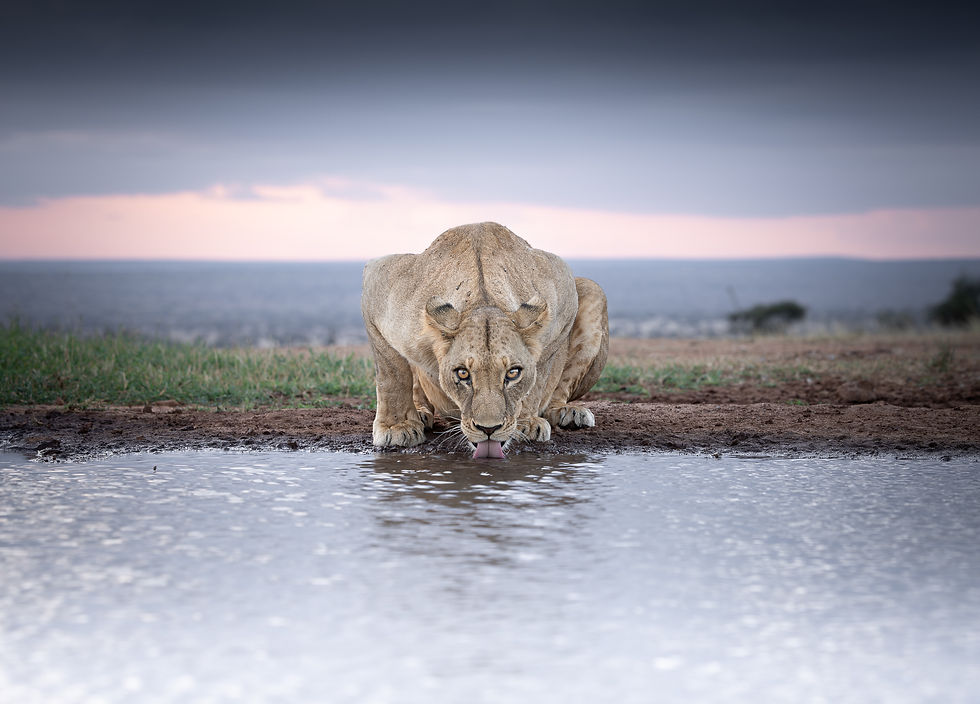
Throughout the encounter, the lioness drank, paused, observed her surroundings and continued to move naturally through the area. At times it appeared she may have been pregnant, adding even more interest to an already exceptional sighting.
For our guest, it was a truly unforgettable moment and one of the standout encounters of the safari.
The following day, we continued exploring the conservancy and shifted our attention to one of Lumo’s most distinctive photographic subjects: the fringe-eared oryx. Found primarily within the Tsavo ecosystem, these beautiful antelope provided excellent opportunities and offered a welcome contrast to the larger mammals we had focused on throughout much of the safari.

Lioness visits the Lions Bluff photo hide 
Lions Bluff Photo Hide
Their striking markings, elegant shape and connection to the dry, open landscapes of the region made them a perfect subject to round off our time in Lumo. After the intensity and intimacy of the lioness encounter in the hide, photographing fringe-eared oryx the next day brought a quieter but equally rewarding end to our final destination.
Together, the Lions Bluff hide experience and the oryx photography made Lumo Conservancy a fitting conclusion to an incredible photographic safari across Kenya.
Why Choose a Private Kenya Photo Safari?
One of the greatest advantages of a private photographic safari is flexibility.
Throughout this safari, every decision was made with photography in mind. Whether positioning for lions charging from a carcass, waiting patiently for a leopard to emerge, anticipating the movements of elephant herds in Amboseli or spending time with a lioness at eye level in a photographic hide, success came not from luck alone but from patience, planning and experience.

Private Photographic Safaris, Kenya - Mark A Fernley 
Photographic Safaris - Masai Mara - Untamed Photo Safaris
This flexibility also extended to the vehicle itself. Chairs were removed from the safari truck to create more space for movement, allowing our guest to work more freely with long lenses, change position quickly and, most importantly, get low when the photographic opportunity required it. For wildlife photography, this extra space can make a significant difference, helping create stronger angles, cleaner compositions and a more intimate perspective on the subject.
Combined with one-on-one guidance from photo host Mark A. Fernley and the use of specialised photographic vehicles & driver, private safaris allow photographers to maximise every opportunity and return home with images that would be difficult to achieve on a traditional safari.
For our guest Gert, this safari delivered exactly that: unforgettable wildlife encounters, unique photographic opportunities and a collection of images spanning some of Kenya's most iconic wildlife destinations.


