

Safari Vehicles Built for Wildlife Photographers
Updated: Sep 25
Safari Vehicles Built for Wildlife Photographers
When people think about booking an African photo safari in east Africa, they often focus on the destination first. They think about the Masai Mara, Amboseli, Tanzania, Uganda, the Great Migration, big cats, elephants, gorillas, hides, lodges and the time of year. All of that matters. But for wildlife photographers, one of the most important parts of the entire safari is often overlooked. The safari truck!
For a wildlife photographer, a safari vehicle built for wildlife photographers is not just a way of getting from one sighting to the next. It is your mobile hide, your shooting platform, your classroom, your workspace and, in many situations, the only position you are legally allowed to photograph from.
A standard safari vehicle might be suitable for general wildlife viewing, but photography is different. Photographers need space, access, stability, low angles, clean shooting lines, safe camera storage, beanbags, charging points and a vehicle setup that allows the photo host and driver to position the truck properly for light, background and behaviour.
At Untamed Photo Safaris, our safari vehicles are designed around photographers. Everything from the seating layout to the number of guests in the vehicle is chosen to improve the photographic experience in the field.
A good photo safari vehicle can be the difference between simply seeing wildlife and creating powerful wildlife images.
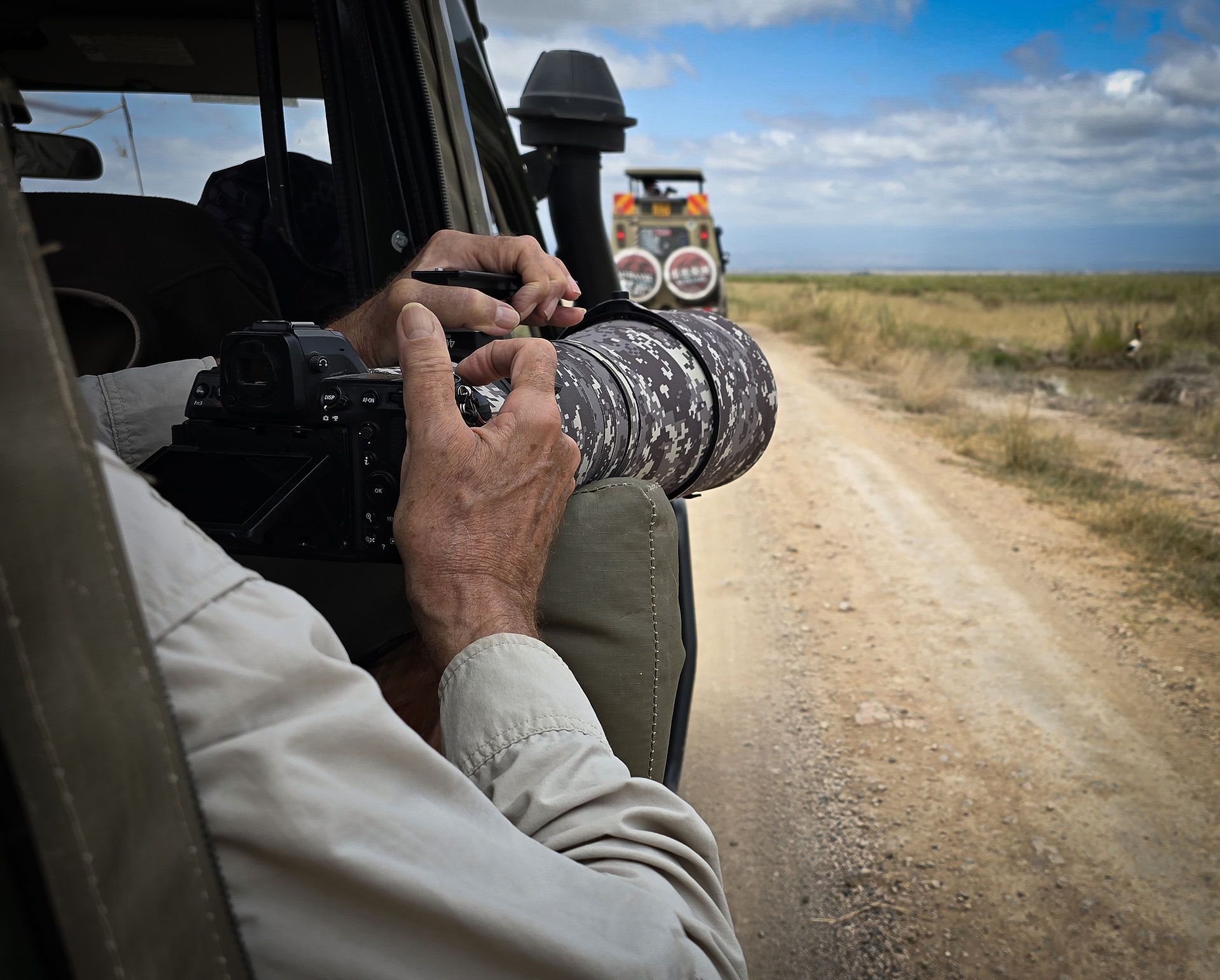
Telephoto African Wildlife Photography - Untamed Photo Safaris 
Elephant under Kilimanjaro - Untamed Photo Safaris
What Is a Photo Safari Vehicle?
A photo safari vehicle is a safari truck that has been adapted specifically for wildlife photography. Unlike a standard safari vehicle, which is usually designed for general viewing and passenger transport, a photographic safari truck is designed to give photographers the best possible access, stability and working space.
In simple terms, it is a safari vehicle built around cameras, lenses and photographers.
In many of our Kenya & Tanzania safari trucks, the windows are removed to create wide, clear shooting areas. This allows photographers to shoot freely from the sides of the vehicle without having to work through small sliding windows, narrow gaps or reflective glass. When you are photographing fast-moving wildlife, this matters. A lion walking past the vehicle, a cheetah changing direction, or an elephant moving through dust can all happen quickly. You need a clear line of sight and the ability to react instantly.
For road transfers between national parks, reserves or conservancies, the vehicles can still use roll-up or roll-down window coverings. These are useful when driving on public roads, in dusty areas or during poor weather. Once in the photographic area, the vehicle can then be opened up again to create the best possible shooting platform.
This is one of the main differences between a normal safari vehicle and a proper photo safari truck. A normal safari truck is often built for sightseeing. A photo safari truck is built for making images.
A good photo safari vehcile should allow photographers to work from multiple angles. You should be able to shoot from the side, shoot through the open roof, rest a long lens on a beanbag, quickly switch direction and move with minimal restriction. The vehicle should also allow the photo host and driver to work together to position the truck correctly, not only for the best view, but for the best photograph.
That distinction is important. The best view is not always the best photographic position.
For example, a general safari vehicle may drive as close as possible to a lion because that gives guests an exciting view. But for photography, being too close can be a problem. You may lose the environment, cut off the paws, miss the background, or be forced into an awkward angle. A photographic safari truck gives the photo host and driver the flexibility to think about distance, light direction, background, lens choice and animal behaviour before settling into position.
A photo safari truck is also a space where photographers receive tuition in real time. The host can explain where to place the focus point, when to increase shutter speed, how to expose for backlight, when to shoot wider, when to wait, and how to anticipate behaviour before it happens. The vehicle becomes part of the photographic process.
For wildlife photography, the safari truck is one of the most important tools on the trip.
Photo Safari Vehicle vs Standard Safari Vehicles
Not all safari vehicles are designed for photographers. Many are built for general game viewing, where the priority is to get guests close to wildlife and give everyone a view. That is fine for a standard safari, but it can create problems for photographers.
The first major issue is the windows.
Many standard safari vehicles have sliding windows. These can be limiting for photography because they restrict your shooting angle. You may only have a small opening to work through, which makes it difficult to pan with moving animals, shoot wide scenes, follow birds in flight, or quickly change your composition. Sliding windows can also force photographers to shoot from a higher or more awkward angle than they would like.
In contrast, a photo safari truck is designed to create open shooting access. With the windows removed or opened up, photographers have far greater freedom. You can move your lens more easily, shoot from a wider range of angles, and react quickly when wildlife moves.

Image showing a non photographic safari truck

Image showing a photographic safari truck
The second major difference is space.
A standard safari truck may carry more guests, meaning people are sitting close together with camera bags, long lenses and personal items competing for room. This can become frustrating very quickly. Wildlife photography often involves large lenses, multiple camera bodies, beanbags and accessories. Photographers need space to work safely and efficiently.
In our Untamed group safari trucks, we limit the number of photographers in the back of the vehicle to three. This gives each guest enough room to move, store equipment and work without constantly getting in the way of someone else. When a sighting develops quickly, this becomes extremely important.
The third difference is support.
Photographers often use beanbags in safari vehicles because they provide a stable base for long lenses. A beanbag allows the photographer to rest the lens on the side of the vehicle or on the pop-up roof, reducing vibration and improving stability. This is especially useful when using long focal lengths such as 400mm, 500mm or 600mm, where even small movements can soften an image.
Beanbags are also useful when working from the pop-up roof. They allow photographers to rest the lens securely while maintaining flexibility. Unlike a fixed tripod head, a beanbag allows quick movement, making it ideal for unpredictable wildlife.
Charging points are another important feature in a photo safari vehicle. Wildlife photographers often use mirrorless camera bodies, which can consume batteries quickly, especially when shooting high frame rates, using electronic viewfinders, recording video or reviewing images in the field. Having charging points in the vehicle means batteries, phones and small accessories can be charged during long game drives.
In some vehicles, we may also remove or adjust the boot area to create extra room for camera bags and equipment. This gives photographers safer access to gear and reduces clutter in the seating area. A clean, organised truck makes it much easier to react quickly when something happens.
Where available and permitted, off-road permits can also make a significant difference. Off-road access can allow the vehicle to move into a better photographic position, especially when working with big cats, open plains or specific behaviour. This is not about chasing wildlife or getting too close. It is about responsible positioning, respecting the animal and improving the photographic angle where regulations allow. A standard safari vehicle is built to show you wildlife. A photo safari truck is built to help you photograph it properly.

Amboseli Photo Safaris - Untamed Photo Safaris 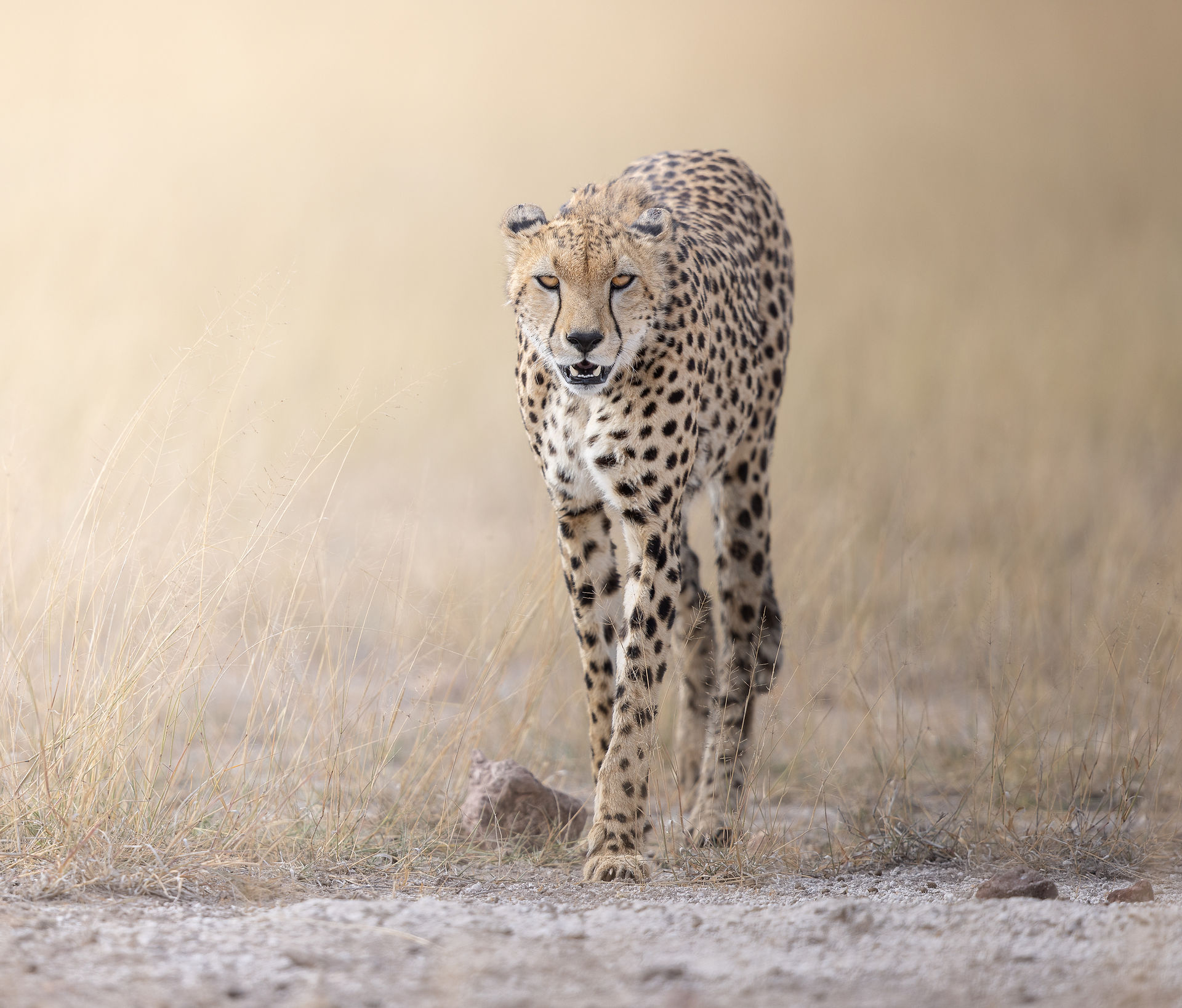
Eye Level Cheetah Photography - Untamed Photo Safaris 
- Untamed Photo Safaris
Group Photo Safari Vehicle Setup
Our group photo safari vehicle setup is one of the key reasons Untamed Photo Safaris stands out.
On our group safaris, we operate with one expert driver, one professional photo host and only three guests in the back of the vehicle. This creates a much better working environment for photographers than a crowded vehicle.
Three guests per truck allows each photographer to have enough space for themselves, their camera gear and their shooting position. It also allows the photo host to give more individual attention to each person throughout the day.
The seating is arranged in a way that is designed specifically for photography. Rather than placing guests across both sides of the vehicle in a standard passenger layout, the seats are positioned in a single row on one side. This gives photographers access to both sides of the vehicle. That is a major advantage.

Above is the seating arrangement for our group photo safaris
Wildlife does not always stay on the side you expect. A lion may walk around the vehicle. Elephants may cross behind you. A leopard may appear on the opposite side of the track. Light may be better from one direction, then completely change as the animal moves. When photographers have access to both sides of the truck, they are not trapped in one shooting position.
The empty side of the vehicle is also useful for low-angle photography. Cushions can be placed on the floor so photographers can get lower inside the truck. This allows them to shoot from a lower perspective while still remaining inside the vehicle and following park rules.
This is especially useful for photographing big cats, elephants, plains wildlife and low subjects in grass. A lower angle can make an image feel more intimate, more dramatic and more professional. Rather than looking down on the animal from a high vehicle angle, the photographer can create a frame that feels closer to eye level.
The photo host can also work directly with guests in this setup. Because there are only three photographers, the host can move, advise and teach throughout the drive. They can explain why one angle is stronger than another, when to wait for eye contact, how to expose for a bright sky, how to use grass creatively, and when to change focal length.
This is what makes the vehicle more than transport. It becomes a teaching space and a photographic platform.

Private Photo Safari Vehicle Setup
Private photo safaris allow even more flexibility because the vehicle can be arranged around the needs of the individual guest or private group.
For a single private guest, the setup can be extremely spacious. The guest may have two seats in the back, with the photo host sitting alongside them for easier communication and tuition. This can be especially useful for photographers who want more direct guidance in the field.
With the host nearby, it becomes easier to discuss settings, composition, lens choice and field technique in real time. The host can look at the back of the camera, explain what is working, suggest a different shutter speed, help with exposure compensation, or advise when to stop shooting and wait for better behaviour.
For two or three private guests, the seating can be arranged depending on the photographic goals of the group. Some guests may prefer maximum space. Others may prefer a setup that allows more communication with the host. The important point is that the vehicle can be adapted to the needs of the safari.

Above is the seating arrangement for one photo host, as they have flexibility to move from seat to seat.
For private groups, we generally recommend a maximum of three guests in a vehicle for the best photographic experience. However, four guests may be possible if the private group is happy with the arrangement and understands that space will be slightly more limited. Two photo trucks with two guests and a photo host in each is also a possibility and can make a strong and productive work flow when out on safari.
Private safari trucks can also be arranged for guests with specific mobility needs. Seats can be adjusted, removed or repositioned depending on what is required. This flexibility allows us to make the experience more comfortable and practical for different photographers.
A private photo safari vehicle is not a fixed product. It is a working photographic platform that can be adapted to the person using it.

Private Photographic Safaris - Untamed Photo Safaris 
Wildlife photography lenses - Untamed Photo Safaris
Take a look at our photographic safari trucks, Jaren A Fernley will tell you what these custom bulit photo machines are all about here in East Africa.
Wheelchair Accessible Safari Vehicle Setups for Photographers
Accessibility is an important consideration in safari vehicle design. Wildlife photography should be as inclusive as possible, and in Kenya we can adapt certain safari truck setups for wheelchair users or guests with reduced mobility.
In some setups, all seats can be removed from the back of the vehicle to create space for a wheelchair. A ramp can then be used to assist with access into the vehicle. Once inside, the wheelchair can be securely locked in place, allowing the guest to travel and photograph safely from the back of the truck.
This creates a more practical and stable setup for photographers who may not be able to transfer easily into a standard safari seat.
The vehicle itself can also assist with photographic angles. Because the wheelchair is positioned inside the back of the safari truck, the photographer can still work from the vehicle and photograph wildlife from a safe, supported position. Depending on the setup, the side access, open windows and roof area can all help create different shooting opportunities.
For wildlife photography, comfort and safety are essential. A photographer needs to be able to concentrate on the image, not worry about balance, access or whether they can react in time. An accessible safari truck setup can make a huge difference by creating a secure and practical working space.
This can be particularly valuable on longer safaris, where guests may spend many hours in the vehicle each day. The more comfortable and secure the setup, the more energy the photographer can put into the actual photography.
Every photographer has different needs, so accessible vehicle arrangements are best discussed in advance. The aim is always to create a setup that is safe, comfortable and genuinely useful for photography.

Why Space Matters in A Photo Safari Vehicle
Space is one of the most important features of a good photo safari truck.
On a general safari, guests may only need a seat, a window and a view. On a photographic safari, the requirements are very different. Photographers often travel with two camera bodies, long lenses, wide-angle lenses, spare batteries, memory cards, beanbags, cleaning kits, rain covers and sometimes video equipment. All of that needs to be stored safely and accessed quickly.
When a vehicle is crowded, photography becomes harder. You may not be able to swing your lens properly. You may not be able to move to the opposite side. You may have to shoot over someone else’s shoulder. You may struggle to get your camera bag open when something important happens.
This is why Untamed Photo Safaris uses three guests per vehicle on our group photo safaris.
Three guests is an excellent number for a photographic safari truck. It allows enough people for a social group experience, but not so many that the vehicle becomes crowded. Each guest has space to work, space to store gear and space to move when the action changes.

Stunning Female Leopard, Masai Mara - Untamed Photo Safaris 
Private Photographic Safari Truck - Untamed Photo Safaris 
Leopard and Tree, Masai Mara - Untamed Photo Safaris
It also gives the photo host more time with each photographer. On a crowded vehicle, a host may struggle to give meaningful tuition to everyone. With only three guests, the host can spend more time helping each person with settings, technique and field decisions.
This is especially important in Kenya and Tanzania, where wildlife sightings can be fast-moving and highly photographic. In places such as the Masai Mara, Amboseli, Serengeti and Ndutu, situations can change quickly. A cheetah may begin to stalk. A lion may start walking. A herd of elephants may approach a dust patch. Wildebeest may suddenly move towards a crossing point. In these moments, photographers need space to react.
A spacious photo safari truck also helps with lens choice. Sometimes a 500mm lens is ideal. Sometimes the animal comes closer and a 70-200mm becomes the better choice. Sometimes a wide-angle environmental frame is stronger than a tight portrait. When you have space, you can keep multiple options ready and make better decisions in the field.
Comfort also matters. Long days on safari can be physically tiring, especially when you are waking before sunrise and staying out until the last light. A spacious vehicle reduces fatigue and allows photographers to stay focused for longer.
This is why our safari trucks are not designed to carry the maximum number of people. They are designed to create the best possible photographic experience.

Marabou Stork, Northern Serengeti - Untamed Photo Safaris 
Lioness and Cubs, Central Serengeti - Untamed Photo Safaris 
Hippos of the Serengeti - Untamed Photo Safaris
Getting Low for Better Wildlife Photography
One of the most powerful ways to improve wildlife photography is to change the shooting angle.
Many safari images are taken from a high position, looking down from the vehicle. This can work in some situations, but it often makes the animal look smaller, flatter and less connected to the viewer. A lower angle can completely change the feel of the image.
Getting low helps create a stronger sense of presence. It can make the animal appear more powerful, place the viewer at eye level and separate the subject from the background. It can also create more depth by allowing foreground grass, dust or texture to become part of the frame.
This is one of the reasons our vehicle setup is so useful. With the seating arranged to create open space on one side, photographers can get down lower inside the truck while still remaining safe and within park rules.
Here are five examples of how getting low can improve wildlife photography.

Masai Mara Leopard - Untamed Photo Safaris 
Masai Mara Photographic Safaris - Untamed Photo Safaris
1. Big Cats Walking Towards the Vehicle
Lions, leopards and cheetahs often look far more powerful when photographed from a lower angle.
If you photograph a lion from above, the image can feel like a record shot. You are looking down at the animal, which reduces its presence. But if you get lower, the lion begins to feel more dominant in the frame. The shoulders look stronger, the eyes become more engaging and the background often becomes cleaner.
This is especially effective when a big cat is walking towards the vehicle. A lower shooting angle helps create a more dramatic perspective, particularly with a long lens and a shallow depth of field. The viewer feels closer to the animal’s world rather than looking down from above it.

2. Elephants Against Big Skies
Elephants are ideal subjects for low-angle photography.
When you photograph elephants from a lower position, they appear larger and more impressive. This is particularly effective in places like Amboseli, where elephants can be photographed against open skies, dust, clouds or Mount Kilimanjaro.
A higher angle may place the horizon through the middle of the elephant’s body, which can weaken the composition. A lower angle can push the horizon down, making the elephant stand out against the sky. This creates a cleaner and more powerful image.
Low angles also work well when elephants are walking in a line, throwing dust, interacting with calves or crossing open ground in golden light.

3. Predators Moving Through Grass
Grass can either ruin an image or make it beautiful. The difference often comes down to angle.
When photographing lions, cheetahs or leopards in grass, a lower position can help you shoot through the vegetation rather than down onto it. This can create a soft, atmospheric foreground that adds depth and mystery to the image.
With a wide aperture, the grass in front of the subject can blur into colour and texture. This helps frame the animal and gives the image a more artistic feel.
However, this requires careful focus. When shooting through grass, the camera may try to focus on the foreground rather than the animal. This is where field tuition from a photo host becomes valuable. Knowing when to use single-point focus, when to adjust focus area size, and when to wait for a clear gap can make the difference between a missed shot and a strong image.

4. Eye-Level Portraits
Eye contact is one of the strongest elements in wildlife photography.
When you photograph an animal from eye level, the image often feels more intimate and engaging. The viewer connects with the subject more directly. This is true for big cats, elephants, giraffes, plains game, primates and even smaller animals.
A high angle can create distance between the viewer and the subject. A lower angle can create connection.
This is particularly important for portraits. Whether photographing a lion resting, a cheetah scanning the plains, a young elephant beside its mother, or a hyena looking towards the vehicle, the angle of the camera has a huge impact on the emotional strength of the image.

5. Cleaner Backgrounds and Better Subject Separation
Getting low can also help remove distractions.
Wildlife photography is not just about the animal. The background is just as important. A messy background can weaken an otherwise good sighting. Bushes, tracks, other vehicles, bright patches of sky or cluttered vegetation can all distract from the subject.
By changing the shooting angle, you can often change the background completely.
A lower angle may place the subject against a distant hillside, open sky, soft grass or shaded background. This creates better subject separation and helps the animal stand out.
This is where a photo host can make a major difference. A professional wildlife photographer will be thinking about background constantly. They will not only ask, “Can we see the animal?” They will ask, “What is behind it? Where is the light? What will happen if it keeps walking? Should we stay here or move ahead?”
That is the difference between a sighting and a photograph.

Expert Safari Drivers and Professional Photo Hosts
A successful photo safari depends on teamwork.
The driver and the photo host have different skills, and both are essential.
A knowledgeable safari driver understands the landscape, the wildlife and the behaviour of the animals. They know the tracks, the terrain, the rules of the reserve and the safest way to position the vehicle. They know where animals have been seen, how different species move through the area, and how to read signs in the environment.
This knowledge is incredibly important. A great driver can anticipate where a lion may walk, where elephants may cross, where a leopard may descend from a tree, or where a cheetah may move when it starts hunting. They understand animal behaviour, body language and the rhythm of the ecosystem.
However, wildlife knowledge alone does not always create the best photograph.
That is where the professional photo host comes in.
The photo host is thinking like a photographer. They are looking at light direction, shadow, background, lens choice, angle, shutter speed, composition and behaviour. They are thinking about where the vehicle needs to be for the strongest image, not simply the closest view.
For example, a driver may know where a lion is likely to walk. The photo host then considers where the light will hit the lion, what background will be behind it, what focal length guests are using, and whether the vehicle should be slightly ahead, slightly behind, lower, wider or further away.

Photo Safari Host - Jaren Fernley 
Photo Safari Host - Mark Fernley, driver and private guest 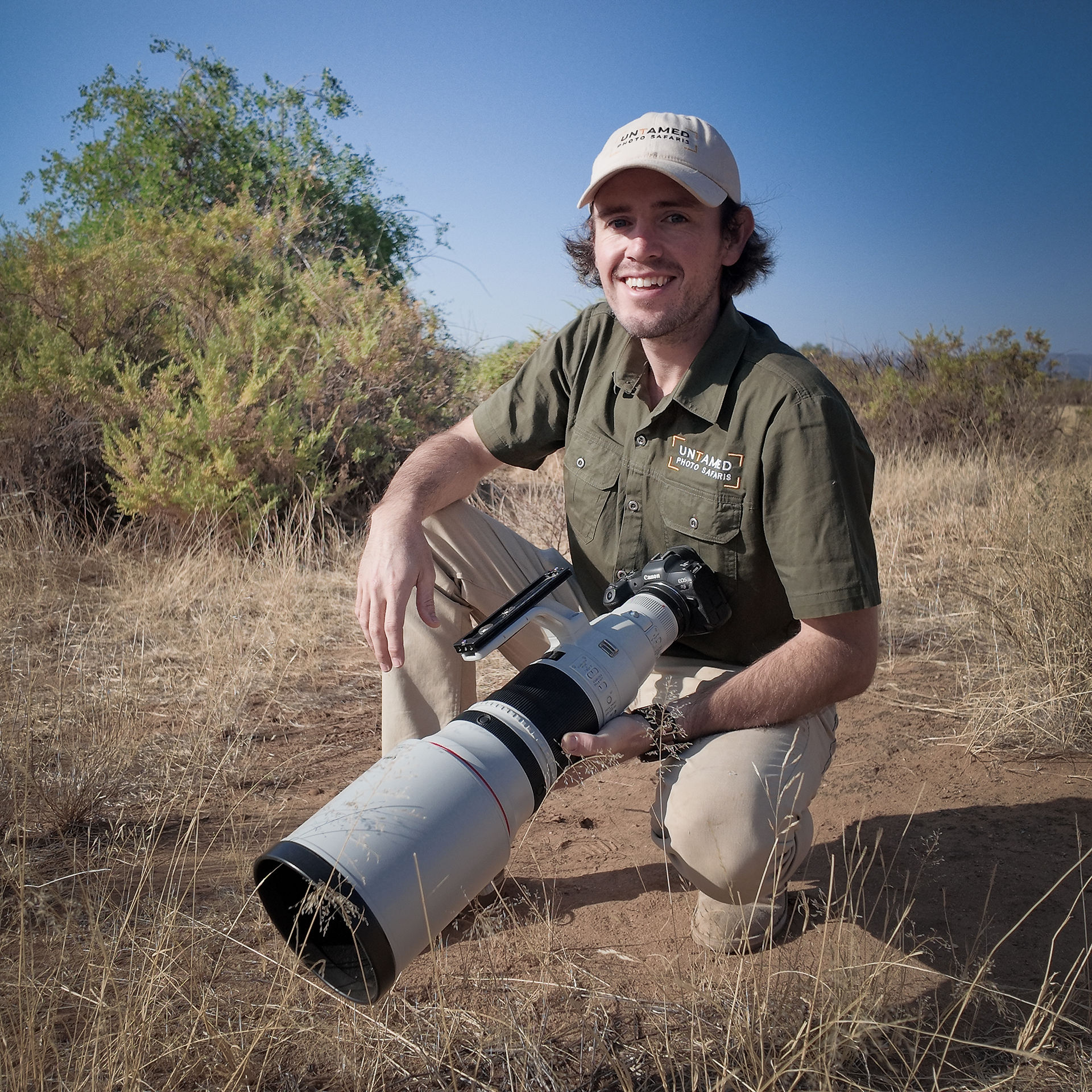
Photo Host - Mark Fernley
This combination is what creates the best photographic opportunities.
A photo host can also help guests understand what is about to happen. Wildlife photography often rewards anticipation more than reaction. If a lion starts looking in one direction, a cheetah lowers its body, elephants bunch together, or birds begin alarm calling, those are clues. A skilled host can read those moments and help photographers prepare before the action happens.
Technical guidance is also important. In the field, a photo host may advise guests to increase shutter speed for action, lower ISO when the light improves, use exposure compensation for bright backgrounds, switch to a wider lens for environmental images, or stop shooting and wait for a cleaner moment.
For example, if a lion is walking towards the vehicle in low light, the host may suggest a faster shutter speed to freeze movement, a wider aperture for subject separation, and a focus mode that can track the face or eyes. If elephants are backlit in dust, the host may advise exposing for the highlights, using negative exposure compensation, and waiting for the dust to catch the light.
This type of guidance can be difficult for a driver to provide while also managing the vehicle and monitoring the wildlife. That is why having both an expert driver and a professional photo host is so valuable.
The driver keeps the vehicle safe, legal and well-positioned in relation to the wildlife.
The photo host refines the photographic decision-making.
Together, they create a far stronger experience for photographers.

Why Vehicle Positioning Is More Important Than Getting Close
One of the biggest misunderstandings in safari photography is the idea that closer is always better.
It is not.
For wildlife photography, the best position is often not the closest position. It is the position with the best light, the cleanest background, the strongest angle and the greatest chance of behaviour.
Sometimes this means staying further back. Sometimes it means moving ahead of the animal and waiting. Sometimes it means turning the vehicle slightly to improve the shooting angle. Sometimes it means leaving a crowded sighting and looking for a better opportunity elsewhere.
This is where a photographer-focused safari truck makes a big difference. Because there is space in the vehicle and fewer guests, the photo host can make more thoughtful decisions. Instead of simply rushing from one sighting to another, the team can work a subject properly.
For example, with a walking lion, the goal is not just to get a close-up of the face. The stronger image may come when the lion walks into a patch of golden light, passes through dust, looks directly at the camera, or moves against a clean background. That requires anticipation and positioning.
With elephants, the best image may come from waiting for the herd to line up, for a calf to step into view, for dust to rise, or for Kilimanjaro to appear through the clouds.
With cheetahs, the vehicle may need to be positioned with enough space to allow for movement if a hunt begins. Too close, and the photographer may not be able to frame the action. Too far behind, and the opportunity may be missed.
A good photo safari vehicle allows the host and driver to think ahead.
That is what creates better wildlife images.

African Lion on the Hunt - Untamed Photo Safaris 
Spotted Hyena & Carcass - Untamed Photo Safaris 
African Elephant and Kilimanjaro - Untamed Photo Safaris
The Safari Vehicle as a Mobile Classroom
One of the most valuable parts of a photographic safari is learning in the field.
You can watch videos, read books and practice at home, but nothing replaces being in the vehicle with wildlife in front of you and a professional photographer explaining decisions as they happen.
The safari truck becomes a mobile classroom.
The photo host can explain why a certain angle works, why the vehicle is being moved, why the group is waiting, or why the background is not strong enough yet. Guests can ask questions, review images and make changes immediately.
This is especially useful for photographers who want to improve quickly. Instead of only receiving feedback after the sighting is over, they can adjust during the moment. They can change their focus mode, alter their exposure, reframe the image, lower their angle or switch lenses while the opportunity is still happening.
For beginners, this helps build confidence.
For experienced photographers, it helps refine fieldcraft.
Even advanced photographers benefit from being in a vehicle designed for photography, because wildlife photography is not only about camera settings. It is about timing, patience, positioning and decision-making.
A good photo safari truck supports all of that.

Evening Wildlife Photography - Untamed Photo Safaris 
Leopard in the Tree, Masai mara - Untamed Photo Safaris
How Untamed Photo Safaris Is Different
Untamed Photo Safaris is different because our safaris are designed around photographers from the beginning.
We are not offering general safaris with a bit of photography added on. Our trips are built for people who want to improve their wildlife photography, photograph from better positions and spend time in the field with professional photographic guidance.
Our safari trucks are a major part of that.
On our group photo safaris, we use only three guests per vehicle. This gives each photographer space, comfort and access to both sides of the truck. It also means the photo host can spend more time with each guest, helping them in the field and explaining the decisions behind each photographic opportunity.
Our seating layouts are designed for photography, not maximum passenger numbers. In Kenya, we can arrange single-row seating, open sides, low-angle shooting space, cushions, beanbags and adapted setups for private or accessible safaris. In Tanzania and Kenya, our safari trucks stand out because they are built around the practical needs of photographers.
We also understand that a good vehicle is only one part of the equation. The real strength comes from combining the right safari truck with an expert local driver and a professional photo host.
The driver brings knowledge of the land, the wildlife and the behaviour of the animals.
The photo host brings photographic skill, field experience, composition, light, technical knowledge and creative direction.
Together, they help guests get into the best position for the strongest possible images.
Our approach is also ethical. We do not believe in pressuring wildlife for the sake of a photograph. We believe in patience, respect and understanding behaviour. A well-positioned vehicle should allow photographers to capture natural moments without disturbing the animals.
That is what a proper photo safari should be.
Wildebeest great migration - Untamed Photo Safaris Wildebeest Great Migration - Untamed Photo Safaris
Why the Right Safari Vehicle Can Change Your Photography
The right safari truck changes the way you photograph.
It gives you space to move.
It gives you access to both sides.
It allows you to work with long lenses safely.
It helps you get lower.
It gives you room for your equipment.
It allows better communication with your photo host.
It helps you think more creatively in the field.
For wildlife photographers, these details matter. A great sighting can happen in seconds. If your camera bag is trapped under someone’s feet, your lens cannot move through a narrow window, or you are stuck on the wrong side of a crowded vehicle, the moment may be gone.
A photographer-focused safari truck gives you a better chance of being ready.
That does not mean every photograph will be easy. Wildlife photography is still unpredictable. Light changes, animals move, sightings develop and sometimes patience is required. But with the right vehicle, the right guide and the right photo host, you give yourself the best possible opportunity.
A normal safari vehicle may get you to the sighting.
A proper photo safari truck helps you create the photograph.


